Kids' Room
Design a children's room in any Indian flat that sleeps, stores, studies and plays — safely, and grows with your child from toddler to teen. Budgets ₹25k–₹1.5L+.
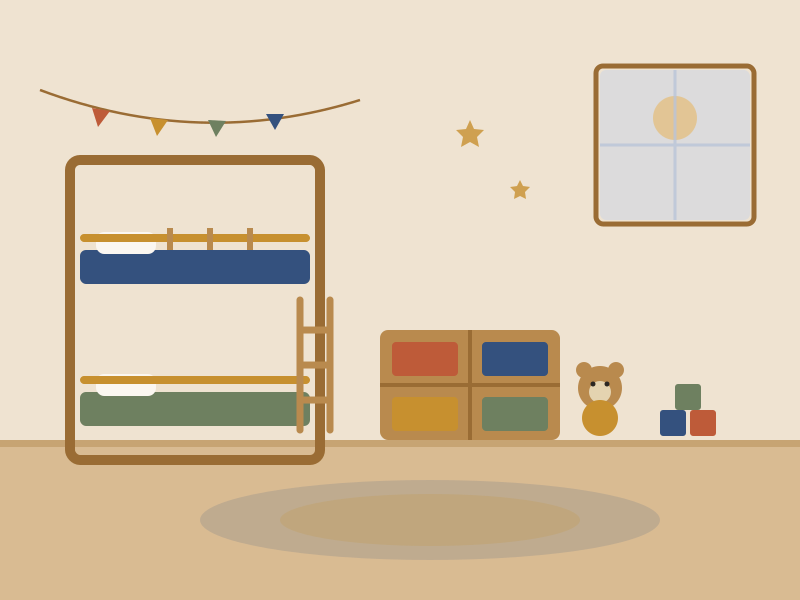
Plan it in the right order
A kids' room is the hardest room in the flat because it has to do four jobs at once — sleep, store, study and play — in the same 7–10 sq m, and it has to keep doing them as the child changes almost every year. The mistake most families make is buying cute, age-specific furniture (a toddler bed, a themed cartoon wardrobe) that looks adorable at three and is useless at seven. Plan instead for the next five years: choose pieces that adapt, and spend on the two things that never stop mattering — safety and storage.
Zone before you buy. Even a small room splits cleanly into three: sleep against the quietest wall, study near the window for daylight, and play in the open floor in the middle. Keep the bed away from the door swing and any window a child could climb to, put the desk where daylight falls from the left (for a right-handed child) so their writing hand doesn't cast a shadow, and leave the centre clear — floor space is what a young child actually plays on. Measure clearances: you want at least 60cm to walk beside the bed and 75–80cm of pull-out room in front of the wardrobe and desk chair.
Buy the bed and wardrobe for age 12, the rest for now
The bed frame and wardrobe are the expensive, hard-to-replace pieces — buy them full-size and neutral so they last a decade. Save the personality (and the small budget) for the cheap, swappable things: bedding, wall decals, a rug, a lamp, storage baskets. A child's taste changes every couple of years; make sure the ₹500 things carry the theme, not the ₹25,000 ones.
Plan in 5 steps
- 1 Measure the room and mark the door swing and window heights, then sketch three zones — sleep, study, play — before buying anything.
- 2 Place the full-size bed against the quietest wall, away from windows a child could climb to, leaving 60cm to walk beside it.
- 3 Set the desk by the window so daylight comes from the side, with 75cm of chair pull-out room behind it.
- 4 Line one wall with low, reachable, open storage for everyday things, and put heavy or hazardous items up high out of reach.
- 5 Anchor every tall piece to the wall, fit corner guards where needed, then add the swappable decor layer — bedding, decals, rug and lamp.
Get the essentials right
Sleep zone against the quiet wall
Place the bed on the wall furthest from the door and away from any window a child could climb to. A single 90x190cm bed suits most rooms; a bunk or loft frees floor space if two children share or the room is under 8 sq m. Leave 60cm to walk alongside it.
Study zone by the window
Put the desk where daylight arrives from the side, not behind the screen or the child's back. A 90–110cm desk near the window means homework happens in natural light for most of the day; add a task lamp for evenings. Keep 75cm of chair pull-out room behind it.
Play + storage in easy reach
Keep the room's centre as clear floor as possible — that's the real play area for younger kids. Line one wall with low, open storage (cubbies, baskets, a bookcase) that the child can reach and put away themselves. Reachable storage is what makes tidying actually happen.
Three ways to do it
Essential
A safe, functional room built around a full-size bed, real storage and a proper study spot — with personality added through cheap, swappable decor.
- A sturdy single bed (90x190cm) with a firm mattress, plus a 2-door wardrobe or open shelving unit anchored to the wall
- A simple 90cm desk and a supportive chair, a good task lamp for homework, and low open baskets or cubbies the child can reach
- Wall decals or a painted feature wall in low-VOC paint, bedding, a soft washable rug and blackout curtains — the swappable 'theme' layer
Comfort
A room that genuinely grows with the child — adaptable furniture, better storage and separated sleep, study and play zones.
- A convertible or full-size bed (or a guard-railed bunk for two kids, top bunk age 6+) with under-bed drawers, plus a taller anchored wardrobe
- A height-adjustable or generous 110cm desk with an adjustable chair and layered lighting (ambient + task) that scales as study load grows
- Dedicated play storage (toy chest with soft-close lid, labelled bins), a pinboard/growth wall, and a washable rug to zone the play area
Premium
A built-to-last, fully zoned room with custom storage and furniture engineered to carry a child from toddler right through the teens.
- Custom loft or bunk with integrated study desk and staircase-drawers, freeing the floor; all furniture anchored and rounded-edge
- Full wall of made-to-measure wardrobe and adjustable-shelf storage in certified low-emission (E1/E0) board, sized for a teenager
- Zoned, dimmable lighting, a proper ergonomic study chair, acoustic/soft finishes, and a design that swaps decor — not furniture — as tastes change
What makes a complete kids' room
Core essentials plus optional upgrades — each links to a live category search.
Some links are affiliate links — we may earn a small commission at no extra cost to you. See our disclosure. Prices indicative; verify before buying.
Build your kids' room budget
Safety, and furniture that grows with your child
A kids' room is the one room where a design decision can genuinely hurt someone — and the one that's outgrown fastest. Get these two things right and you avoid both the emergency and the wasteful re-buy. Here's the specific, number-backed guidance most furniture ads won't give you.
Anchor everything tall
Wardrobes, bookcases and dressers over about 60cm tall must be bolted to the wall with an anti-tip bracket or strap. A climbing toddler can topple an un-anchored wardrobe in seconds — it is one of the most common serious home-furniture accidents. Anchors cost ₹150–400 and take ten minutes; insist your carpenter fits them, and re-fit them after every move.
Rounded edges below 1m
Below roughly 1 metre — head height for a running toddler — choose rounded or bullnose edges on beds, desks and shelves, or add silicone corner guards (₹200–300 for a pack). Sharp 90-degree corners at exactly the wrong height cause most of the bumps and cuts in a young child's room.
Low-VOC, certified materials
Children breathe faster and sleep 10–12 hours a day in this room, so air quality matters more here than anywhere. Use low-VOC or zero-VOC paint, and for engineered wood ask for E1 or E0 grade board (low formaldehyde emission). Air out any new furniture or freshly painted room for a few days before the child sleeps in it.
Bunk beds: age 6+ up top
No child under 6 should sleep on a top bunk. Guard rails are mandatory on both sides of the top bunk, must rise at least 16cm above the mattress top, and the gap between the rail and mattress should be under 9cm so a limb can't slip through. Keep the top bunk at least 60–75cm below the ceiling so a sitting child doesn't hit their head, and fix a securely mounted ladder.
Reachable storage builds tidiness
A child only puts things away if they can reach the spot easily. Keep everyday toys, books and clothes within easy reach — roughly below 90–110cm off the floor for a 4–6 year old — in open baskets and cubbies rather than tall drawers. Store the heavy, rarely-used and hazardous items up high, out of reach. Reachable, open, labelled storage does more for a tidy room than any amount of nagging.
Buy adaptable, not age-specific
Pick furniture that changes jobs instead of getting binned. A cot that converts to a toddler bed then a daybed, a full-size 90x190cm single from the start, a desk and chair with adjustable heights, and adjustable-shelf wardrobes all carry a child from toddler to teen. Neutral finishes plus swappable decor (bedding, decals, a rug) let the room 'grow up' for the price of a few hundred rupees, not a full re-fit.
Vastu, if it matters to you
If you follow vastu, the south-west or south is often suggested for a child's sleep with the head pointing south or east, and the north-east kept lighter for study. Treat this as optional — a safe layout, good daylight for the desk, and the bed away from windows and the door swing matter far more to a child's rest and health than orientation.
Do it yourself
- Assembling ready-made (flat-pack) beds, desks, wardrobes and shelving — and fitting the anti-tip anchors and corner guards yourself
- Painting a feature wall in low-VOC paint, applying removable wall decals, and putting up a pinboard or growth chart
- Setting up the storage system — labelling baskets, arranging low cubbies within reach, and doing the seasonal swap of bedding and decor
Hire a professional
- Custom loft beds, wall-hung wardrobes and any heavy carpentry that must bear a child's weight or be structurally anchored into masonry
- Electrical work — extra sockets (fitted with child-safe covers or at safe height), and any wired or dimmable lighting
- A full space plan when two children share a small room, or when you want built-in furniture sized to last through the teens
Common kids' room mistakes
Buying age-specific 'cute' furniture
The toddler-sized bed and the cartoon-themed wardrobe are adorable at three and useless at seven. Age-specific furniture is the biggest wasted spend in a kids' room. Buy the bed and wardrobe full-size and neutral, and put the personality into cheap, swappable bedding, decals and a rug.
Leaving tall furniture un-anchored
An un-bolted wardrobe or bookcase is a genuine tipping hazard the moment a child tries to climb it. It's the one shortcut that can actually cause serious injury. Every piece over ~60cm tall needs an anti-tip bracket or strap into the wall — non-negotiable, and it costs under ₹400.
Storage only adults can reach
Tall drawers and high shelves guarantee toys stay on the floor, because the child physically can't put them away. Keep everyday things in low, open, reachable baskets and cubbies; a tidy room comes from reachable storage, not from repeating 'clean your room'.
One harsh light and no zones
A single bright tube-light on the ceiling is wrong for sleep, homework and play alike. Layer it: a warm, dimmable ceiling light for winding down, a dedicated task lamp at the desk, and treat the desk, bed and play area as three separate zones rather than one undivided box.
Questions people ask
Roughly ₹25,000–45,000 for a safe, functional Essential room (a full-size bed, a wardrobe or shelving, a study desk and swappable decor), ₹60,000–1 lakh for a Comfort room with adaptable furniture, better storage and separated zones, and ₹1.5 lakh or more for a Premium room with custom loft or built-in storage designed to last from toddler to teen. Spending on safety and full-size, adaptable furniture saves far more over the years than any theme does.
Anchor every piece of furniture over about 60cm tall to the wall with an anti-tip bracket, choose rounded edges (or add corner guards) below head height, use low-VOC paint and low-emission board, cover unused sockets with child-safe plugs, and keep the bed away from windows a child could climb to. For bunk beds, no child under 6 on top, guard rails at least 16cm above the mattress on both sides, and a securely fixed ladder.
Age 6 and above for the top bunk — younger children don't have the coordination to climb and turn safely up there. The top bunk needs guard rails on both long sides rising at least 16cm above the mattress, a gap under the rail of less than 9cm, at least 60–75cm of headroom to the ceiling, and a firmly mounted ladder. Keep a night light nearby so a sleepy child can climb down safely.
Zone the room into three — sleep against the quiet wall, study by the window, play in the clear centre — and go vertical for storage. A bunk or loft bed frees the most floor space, under-bed drawers store bedding and toys, and low open cubbies along one wall keep everyday things reachable. Leave at least 60cm to walk beside the bed and keep the middle floor clear, because that open floor is where young children actually play.
Buy the expensive pieces to last and keep the personality in the cheap ones. Choose a full-size single bed (or a convertible cot), a desk and chair with adjustable heights, and adjustable-shelf wardrobes in neutral finishes — these carry a child from toddler to teen. Then let bedding, wall decals, a rug and a lamp carry the theme, so you refresh the look every couple of years for a few hundred rupees instead of re-buying furniture.