Pooja Room
A calm, sacred corner — even in a compact flat. Here's how to plan the mandir, lighting, placement and budget.
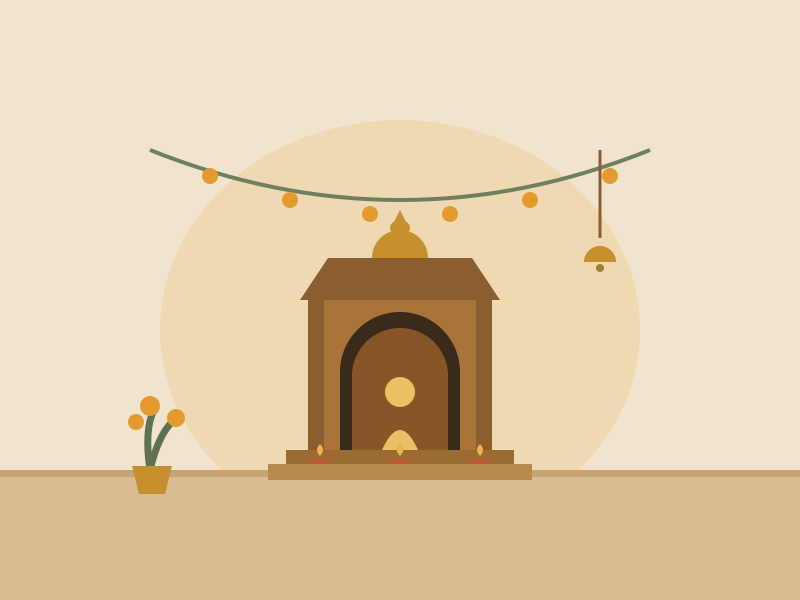
A sacred space that fits your home
Most Indian flats don't have a separate pooja room — and that's completely fine. A well-planned mandir works beautifully on a wall niche, inside a cabinet, or in a quiet corner. The goal is a clean, well-lit, slightly elevated spot that feels calm and separate from daily bustle.
Decide in this order: where it goes (wall / cabinet / corner / small room), the mandir type (wall-mounted, floor unit or built-in), lighting (warm LED plus a diya spot), then storage for essentials and finally accents like a bell, toran and backdrop.
Planning a puja or festival?
Once your mandir is set up, our sister site Utsav Pooja can help you book pandits and puja essentials for festivals and ceremonies.
Plan in 5 steps
- 1 Choose the spot (wall / cabinet / corner)
- 2 Pick a mandir type & size
- 3 Add warm lighting + a diya spot
- 4 Plan storage for essentials
- 5 Finish with bell, toran & backdrop
Four ways to fit a mandir in a flat
Wall-mounted
A compact wooden unit on the wall — ideal for small flats and rentals.
Cabinet mandir
Doors that close keep it dust-free and tidy — great near a kitchen or hallway.
Corner unit
A floor-standing mandir tucked into the north-east corner of a room.
Dedicated room
A small room or niche with a built-in mandir, backdrop and seating.
Vastu guidance, if it matters to you
Many families like to follow vastu for the pooja space. We share it as helpful, optional guidance — your home, your call. None of it is a requirement to have a beautiful, meaningful mandir.
Commonly followed pointers
- Place the mandir in the north-east (Ishaan) corner where possible.
- Face east or north while praying.
- Keep idols slightly raised, not on the floor, and not directly facing the door.
- Avoid placing it in a bedroom or under/adjacent to a toilet wall.
- Prefer warm, natural light and keep the space clean and clutter-free.
From ornate to minimal
A mandir can be richly traditional or clean and modern. Not sure? Take the style quiz →
Three ways to do it
From a simple wall unit to a handcrafted showpiece — a beautiful mandir at any budget.
Essential
A clean, well-lit wall or cabinet mandir — perfect for flats and rentals.
- Wall / wooden temple unit
- LED / diya lighting
- Storage + bell, toran
Comfort
A designer wooden mandir with layered lighting and storage.
- Designer wooden mandir
- Layered lighting + storage cabinet
- Brass accents, backdrop panel
Premium
Handcrafted teak or marble with carved detail and a designed backdrop.
- Teak / marble mandir
- Brass idols + designer lighting
- Marble backdrop, carved doors
What makes a complete pooja space
Core essentials plus optional accents — each links to a live category search so you can buy anywhere.
Some links are affiliate links — we may earn a small commission at no extra cost to you. See our disclosure. Prices are indicative; verify on the retailer.
Build your pooja-room budget
Tick what you need, edit any price, add your own items — your estimate updates instantly.
Common pooja-room mistakes
Harsh white light
Warm light (2700K) feels sacred and calm; cool white feels clinical.
No closed storage
Oil, wicks, matches and samagri need a tidy home — plan a small drawer or cabinet.
Ignoring ventilation
Diyas and incense need airflow. Avoid fully sealed nooks; add a small vent or keep it near air movement.
Oversized unit for the space
Measure first. A too-big mandir overwhelms a flat; a wall unit often looks more elegant.
Questions people ask
A simple wall/cabinet setup is ₹5,000–15,000; a designer wooden mandir with lighting and storage ₹15,000–40,000; handcrafted teak/marble ₹50,000+. Build your own number with the estimator above.
Vastu commonly suggests the north-east corner, facing east or north while praying, with idols raised and not facing the door. It's optional guidance — follow it only if it matters to you.
Absolutely. A wall-mounted or cabinet mandir gives you a clean, sacred spot without a separate room. Keep it slightly elevated, well-lit and clutter-free.
Avoid placing it inside a bedroom, directly under a staircase, or sharing a wall with a toilet. Keep footwear and dustbins away from the space.